The SQLite Bottleneck
RouterOS User Manager (both v5 and v7) runs on a local SQLite database. SQLite is a file-based database. It has a single write lock. When 500 users try to authenticate simultaneously (e.g., at a stadium event), the database locks up. This causes "RADIUS Timeout" errors on client devices.
We often get asked: "Why should I pay for YesSpot cloud RADIUS when MikroTik comes with free User Manager?" The answer lies in database architecture and redundancy.
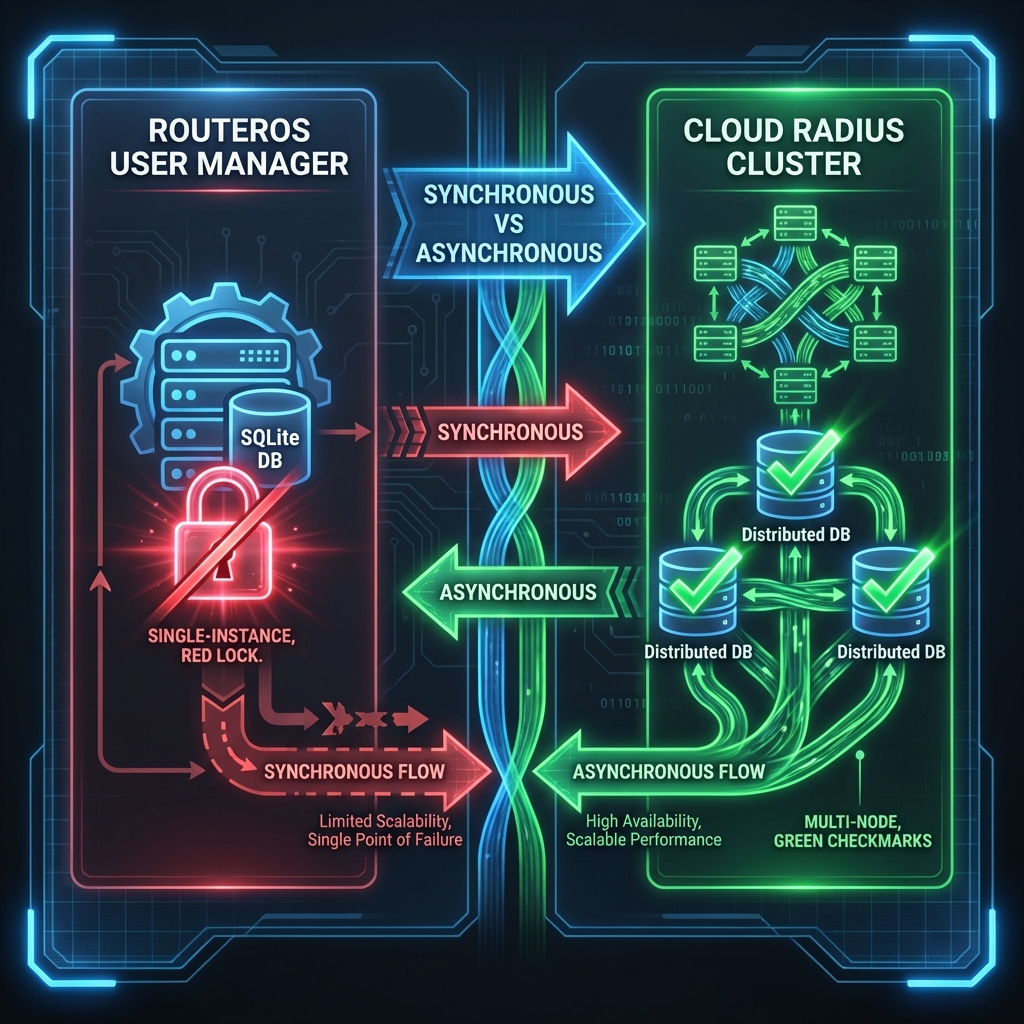
Figure 1: Single-Instance SQLite vs Distributed Cloud RADIUS
1. The Write-Lock Problem
User Manager is great for small offices (50 users). But for an ISP or Hotel:
- Accounting Updates: Every minute, every active user sends an Accounting-Update packet.
- New Logins: New users are trying to authenticate.
In User Manager, these operations compete for the same file lock. If an accounting update takes 200ms, the login request waits. If the wait exceeds 2 seconds, the client device disconnects.
2. The "Flash Wear" Issue
MikroTik routers use NAND flash memory. Databases write constantly.
Warning: We have seen hundreds of RB4011/CCR1009 routers die because the NAND flash wore out from excessive User Manager logging. Cloud RADIUS moves this I/O load to enterprise NVMe servers.
3. Redundancy & Failover
What happens if your main router reboots? With User Manager, your entire authentication system is down. No one can login.
Cloud RADIUS Architecture:
- Multiple Nodes: YesSpot runs RADIUS nodes in Mumbai, Singapore, and Frankfurt.
- Anycast IP: If one node fails, traffic automatically re-routes to the next nearest node.
- Data Safety: Your user database is replicated across 3 availability zones. You never lose voucher data.
Performance Comparison
| Feature | RouterOS User Manager | YesSpot Cloud RADIUS |
|---|---|---|
| Max Concurrent Users | ~300-500 (Stable) | 100,000+ |
| Database Type | SQLite (File Based) | MySQL Cluster (Distributed) |
| Redundancy | Zero (Single Point of Failure) | Multi-Zone Failover |
| Flash Storage Health | High Wear (Risk of Death) | Zero Local Writes |
Conclusion
User Manager is a great tool for home labs or small setups. But if you are running a commercial ISP or Hotel WiFi network, relying on a local SQLite database on a router is a ticking time bomb. Move to the cloud for stability, speed, and peace of mind.